



 Download full article
People often treat ROI as if it’s only about licences and implementation spend. That misses how value actually shows up. Modernising service management creates benefits that are real, even when they do not convert neatly into dollars. Teams work better, services stabilise, and small behavioural shifts reduce friction and waste. These effects influence financial performance indirectly, which is why ROI on its own never tells the full story.
Understanding ROI, TCO, and TEI
- ROI (Return on Investment): measures the financial return from an investment by comparing the benefits gained against the costs incurred. It is usually expressed as apercentage or a payback period.
- TCO (Total Cost of Ownership): looks at the full lifetime cost. With cloud, infrastructure spending moves to subscriptions, but integration, networks, endpoints, and operational overhead still matter.
- TEI (Total Economic Impact™): captures benefits across financial, operational, and cultural dimensions over three to five years. In practice, benefits should include faster resolution times, smoother collaboration, reduced risk, and more predictable outcomes for customers.
The Challenge of Fragmented Tools
I worked with a global organisation where service management was fragmented, with product and engineering teams on a shared platform while service teams were spread across seven different tools in 12 markets. Processes were not consistent, and people often had to swivel between systems just to resolve a single issue. It slowed everything down and introduced real operational risk.
Creating a Unified System of Work
We stabilised operations by bringing everyone onto a service management application on the same platform. Teams could keep their own workflows, but everything was linked, so incidents and requests could connect to engineering or product tasks.
This made a big difference:
- Tickets stayed visible to the customer, improving the experience.
- Manual handovers were reduced.
- Teams could see the full context of work across functions.
- Transparency increased, making it easier to track progress.
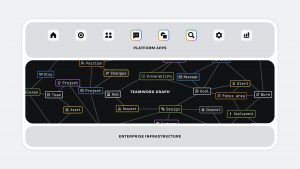
The platform also pulled in context from the knowledge base and configuration management database (CMDB), so decisions could be made without constantly switching between screens. Linking work across teams revealed the full value stream, from customer demand through delivery and continual improvement, and helped identify opportunities to optimise processes.
By bringing portfolio, product, engineering, and operations together in a single environment, the platform supported ITILʼs holistic approach. Teams gained shared visibility, refined workflows iteratively, adopted useful features, and reviewed outcomes quarterly, showing how ITIL principles come to life in practice.
Integration with Unified Communications as a Service (UCaaS) and Contact Centre as a Service (CCaaS)
We paired this with a combined UCaaS and CCaaS strategy, allowing agents to manage calls, create requests, and view queues directly from the UCaaS interface. This approach met users where they were and leveraged the platformʼs extensibility to streamline their work.
Governance and Adoption
Unifying work across markets was more than a tool exercise. Regional requirements around data residency, backups, and workflow compliance meant we had to rethink governance. The challenge was balancing speed, risk, and operational stability.
We introduced structured oversight with new change models, SOPs for standard changes, and automated reminders for disaster recovery and business continuity testing. Automated risk assessments guided decisions, but humans stayed in control for mission-critical approvals.
Adoption varied across regions. Success relied on targeted training, coaching, and support for organisational change. Leadership backing and the maturity of each team also determined how quickly people understood the purpose of changes and adopted new ways of working.
Looking Beyond the Numbers
Enterprise service management delivers its full potential when teams share context and work flows across organisational boundaries. Licence costs matter, but they are just one piece. The biggest gains came from seeing work end to end, sharing responsibility, and getting everyone on the same page culturally. When teams see the same work, understand the same data, and operate on one platform, value flows across the organisation with far greater clarity.
Insights from the TEI Study
In 2024, I contributed to a Forrester TEI study to quantify the impact of this transformation. The numbers were striking. The study pointed to a 275% ROI, roughly USD 7 million NPV over three years, and a payback period of under six months. Efficiency gains and cutting redundant tools were the main drivers.
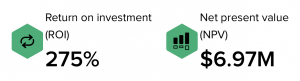
These figures are based on a composite organisation, so they are indicative rather than guaranteed.
The work does not stop once the transformation is complete. Ongoing costs include training, organisational change, and product-led support. With cloud applications constantly evolving, teams need to adopt features that add value, update their practices, and retire what no longer fits.
Tangible Results and Hidden Benefits
The organisation saw improvements across the board:
- Linked work reduced context switching and made it easier to stay on top of tasks.
- Consolidated on-call activity sped up response times.
- Agents gained easy access to knowledge, known errors, and CMDB insights without switching screens.
- Collaboration improved across regions, and conflicting processes were reduced.
- A shared service catalogue and aligned Service Level Agreements (SLAs) ensured a consistent service experience.
- Standardised workflows and data structures cut duplication and rework.
- Predictable support led to higher customer satisfaction.
- Clearer metrics and dashboards helped guide better decision-making.
- Structured change types, approvals, and automated risk assessments lowered operational risk.
Generative AI helped by drafting responses, summarising post-incident reviews, and flagging related incidents. It sped up work but required validation and guardrails to prevent errors.
Next Steps You Can Take
- Map your value streams: Start by visualising how work flows from demand to delivery across your teams. Identify bottlenecks and handoffs that slow down service.
- Assess tool fragmentation: Take stock of all the tools your teams are using and look for opportunities to consolidate or connect them.
- Focus on quick wins: Identify redundant processes or tools you can retire immediately to reduce friction and free up capacity.
- Invest in training and coaching: Even small changes in workflows require guidance.Targeted support helps teams adopt new practices faster.
- Review governance: Ensure change models, approvals, and risk assessments are clear and scalable across regions.
- Iterate regularly: Adopt a quarterly review cadence to evaluate features, processes, and outcomes. Keep what adds value and retire what doesnʼt.